
Why SpaceX Wants Boost Mobile—And Why Telcos Are Terrified
Pull out your phone for a second. Look at those signal bars in the upper corner.
For three decades, a small cartel of legacy carriers built an empire on a simple, expensive physical reality: if you want a reliable cellular signal, someone has to lease real estate, pour concrete, bolt massive metal trusses to the ground, and run thousands of miles of fiber-optic backhaul. That reality cost hundreds of billions of dollars. It created a moat so wide that virtually nobody could cross it.
Then the news leaked this week: SpaceX is actively evaluating a buyout of Boost Mobile from EchoStar. The market's immediate reaction was pure confusion. Why on earth would Elon Musk—a man fixated on multi-planetary colonization, orbital megastructures, and reusable rocket boosters—want a budget prepaid carrier best known for suburban strip mall storefronts? It sounds ridiculous on paper.
It isn't ridiculous. In fact, it might be the most cutthroat infrastructure maneuver of the decade.
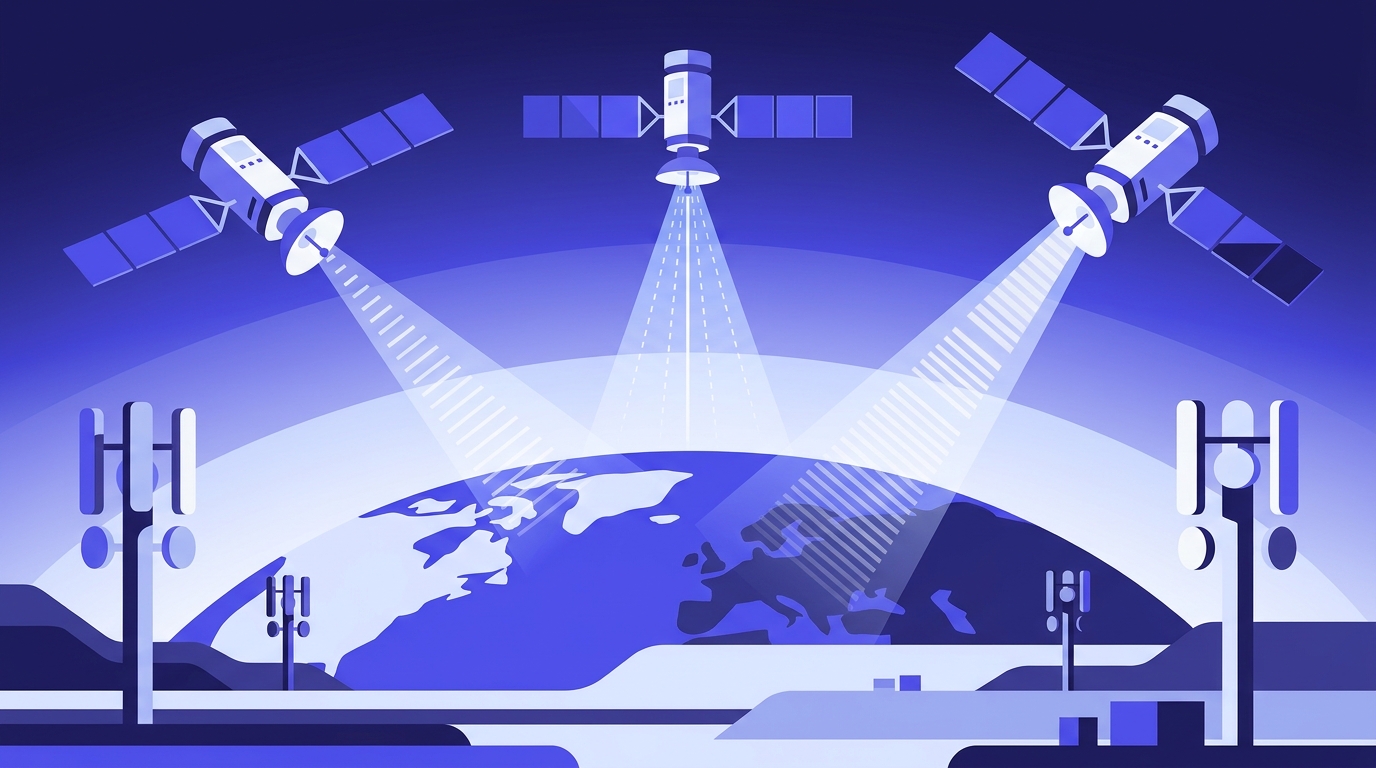
SpaceX doesn't care about selling discounted Android handsets in suburban shopping centers. They want something far rarer: nationwide terrestrial wireless spectrum licenses and an established 5G core. Pair that regulatory asset with thousands of Starlink direct-to-cell satellites orbiting five hundred kilometers above our heads, and SpaceX transforms overnight from an orbital hardware vendor into a sovereign, full-stack cellular carrier. AT&T, Verizon, and T-Mobile spent decades building concrete castles. SpaceX is preparing to bypass the ground entirely.
The Ghost Carrier: Why Boost Mobile Is the Missing Link
To grasp what's unfolding, you have to follow the debt and the airwaves. Boost Mobile belongs to EchoStar, the satellite and telecom conglomerate controlled by satellite pioneer Charlie Ergen. Over the last decade, Ergen amassed an enviable war chest of nationwide mid-band and low-band cellular spectrum—specifically tranches in the AWS-4, H-block, and 2 GHz bands. Ergen's grand plan was to build America's fourth nationwide 5G cloud-native network to rival Verizon and AT&T.
He ran out of cash. Building a ground-up national cellular network with physical towers in every zip code requires staggering capital expenditures. EchoStar found itself buried beneath a mountain of debt, facing looming bond maturities and punishing interest rates. They have the wireless spectrum rights, but their network deployment has struggled to scale against incumbent giants.
Enter SpaceX.
Normally, getting your hands on nationwide commercial cellular spectrum requires two things: decades of lobbying and tens of billions of dollars handed over during Federal Communications Commission (FCC) spectrum auctions. Even if you have the cash, the frequencies you need are simply not for sale. They are locked down by incumbents.
By acquiring Boost Mobile—or buying EchoStar's wireless operating assets—SpaceX bypasses the regulatory meat grinder in one stroke. They instantly inherit:
- Nationwide Spectrum Licenses: Clean, dedicated wireless airwaves that standard smartphones can tune into without requiring proprietary satellite dishes or bulky external antennas.
- An Active Subscriber Base: Roughly seven to eight million existing customers providing immediate baseline revenue and cash flow.
- A Cloud-Native 5G Core: Ready-made billing infrastructure, roaming agreements, and network routing backbones that would otherwise take five years to build from scratch.
Charlie Ergen needs an exit from crushing debt. Elon Musk needs legal airwaves to transmit data directly from orbit into everyday consumer pockets. It is a shotgun marriage made in corporate heaven.
The Physics of Direct-to-Cell: Turning Orbit into a Tower
Here is where my inner physics nerd takes over. Connecting a standard, off-the-shelf smartphone to a satellite in low Earth orbit shouldn't work. The engineering challenges are brutal.
Your smartphone transmits a tiny, feeble signal—barely a couple hundred milliwatts of radio frequency energy. By comparison, a conventional terrestrial cell tower blasts kilowatts of power from just a few miles away. Asking a satellite orbiting at 17,000 miles per hour, 350 miles up in the vacuum of space, to pick up that faint whisper from your pocket phone sounds like science fiction.
SpaceX solved this through sheer brute-force hardware innovation. The direct-to-cell Starlink satellites don't look like their broadband predecessors. They carry massive, custom-designed phased-array antennas spanning roughly 25 square meters. These arrays utilize advanced beamforming to focus microscopic radio lobes onto tiny patches of Earth. Essentially, each satellite carries an advanced eNodeB cellular base station into orbit.
The technical hurdles they had to conquer are wild:
- Extreme Doppler Shifts: Because the satellites rip across the sky at orbital velocity, the radio frequencies shift rapidly as the spacecraft approaches and recedes. The onboard software must constantly predict and counteract this frequency drift in real time so your phone thinks it's talking to a stationary tower.
- Signal Attenuation: Passing through clouds, moisture, and tree canopies degrades weak signals. SpaceX uses high-gain receivers with sensitive low-noise amplifiers capable of isolating microscopic smartphone signals from planetary radio noise.
- Strict Power Budgets: Orbital cell towers must generate, store, and dissipate enormous amounts of electrical energy while dealing with solar eclipse cycles in orbit.
Right now, Falcon 9 rockets are launching direct-to-cell "V2 Mini" satellites in batches. But Falcon 9's payload fairing is tight. The real monster waiting in the wings is Starship. Once Starship enters routine commercial operation, SpaceX will deploy full-scale V2 Starlinks featuring massive antennas and tenfold the transmission throughput. When that happens, bandwidth constraints vanish.
The Panic in Boardrooms: Why the Incumbents Are Shaking
Remember late 2022? T-Mobile CEO Mike Sievert stood on stage in Starbase, Texas, with Elon Musk to announce "Coverage Above and Beyond." The pitch was cozy: T-Mobile would partner with Starlink to eliminate cellular dead zones across America. It looked like a win-win alliance.
I've covered tech disruptors long enough to know that early corporate partnerships are often just Trojan horses. Disruptors play nice with legacy players until they possess the scale to swallow the market whole.
If SpaceX buys Boost Mobile, T-Mobile goes from being SpaceX's favored partner to its direct competitor. That explains why Verizon CEO Hans Vestberg suddenly started issuing stern public warnings this week about satellite-to-cellular interference and spectrum regulations. The legacy telecom bosses see the writing on the wall.
Consider the economic moats of AT&T and Verizon. Their valuations depend on billions of dollars invested in copper, fiber, steel towers, and municipal lease agreements. They charge premium monthly rates to service that capital debt. Every year, they negotiate land leases with farmers, municipal water boards, and commercial rooftop owners just to keep their cell sites active.
SpaceX has zero municipal land leases. They don't pay rent to a rooftop owner in suburban Atlanta or negotiate right-of-way access with a township in Nebraska. Their "towers" sit in the global commons of low Earth orbit. A single cluster of Starlink satellites can blanket an entire state, dynamically routing capacity wherever demand spikes.
Can an orbital constellation replace every dense 5G millimeter-wave node in downtown Manhattan? No. The physics of shared spectral density won't allow millions of people in a two-block radius to stream 4K video simultaneously from space. Ground towers will always win on raw, concentrated urban density.
However, that's not where legacy carriers make their fattest profit margins. Their moat is nationwide coverage—the promise that your phone works when you drive between cities, hike through a national park, or live in a suburban fringe. If SpaceX offers a phone plan with Boost Mobile that provides reliable voice, text, and 5G data everywhere on the continent with zero dead zones, why would anyone keep paying inflated bills to legacy carriers?
The Geopolitical Chessboard: Sovereign Borders vs. Orbital Waves
This goes way beyond consumer billing and stock prices. It's a massive geopolitical flashpoint.
Telecommunications infrastructure has always been intensely nationalized. Governments control their populations and borders by controlling the wires. If a state wants to censor dissent, monitor activists, or throttle internet access during an election, they issue an order to local telecom providers. The providers comply because their physical towers exist on sovereign soil.
Direct-to-cell orbital networks shatter that paradigm. When a cellular network operates from orbit, how does a local regime enforce a communication blackout? They can't, unless they develop the capability to jam space-based phased-array signals across thousands of square miles—a feat that creates massive radio interference for their own military and civil systems.
We already saw this tension explode with Starlink broadband dishes in Ukraine, Iran, and Taiwan. But dishes are physical hardware items that border guards can intercept, confiscate, or trace. A standard smartphone is ubiquitous. If your ordinary iPhone or Galaxy device can establish an encrypted cellular link directly with a spacecraft overhead using standard LTE protocols, traditional state censorship becomes virtually impossible to enforce.
Expect fierce resistance at the International Telecommunication Union (ITU). Authoritarian regimes and protectionist governments will claim that satellite cellular transmissions violate national sovereignty and international spectrum borders. The regulatory fight will be bitter. SpaceX is clearly betting that once consumers experience seamless global coverage, public pressure will make it politically impossible for democratic regulators to shut it down.
The Direct-to-Cell Future: What Happens Next?
We are witnessing the early skirmishes of the first orbital telecom war. This isn't speculative fiction; the filings are real, the corporate distress at EchoStar is immediate, and the orbital hardware is launching every week from Cape Canaveral.
Here is what I expect over the next 18 to 24 months:
- Antitrust and Regulatory Pushback: AT&T and Verizon will flood the FCC and Department of Justice with petitions claiming that SpaceX's dual dominance in rocket launches and orbital communications represents an anti-competitive monopoly.
- Aggressive Spectrum Consolidation: Other satellite startups like AST SpaceMobile and Lynk Global will face intense pressure to find deep-pocketed acquirers or secure exclusive carrier deals before SpaceX captures the market.
- The Eradication of Roaming: If your carrier owns an orbital constellation covering the entire Western Hemisphere, international roaming fees become an archaic relic of the past, like long-distance calling cards.
I track these massive infrastructure collisions daily on Dev Dominion, where we break down the engineering reality behind billionaire hype without the corporate PR filters. What makes this story so fascinating isn't just Elon Musk's appetite for risk—it's the relentless convergence of rocketry, orbital mechanics, and consumer tech.
The wireless industry spent thirty years building taller towers. SpaceX decided to change the definition of high ground altogether. If this Boost Mobile deal closes, look up at the night sky. Your next phone call won't be bouncing off a concrete mast down the street. It will be traveling at the speed of light, through the edge of space, and back down into the palm of your hand.